

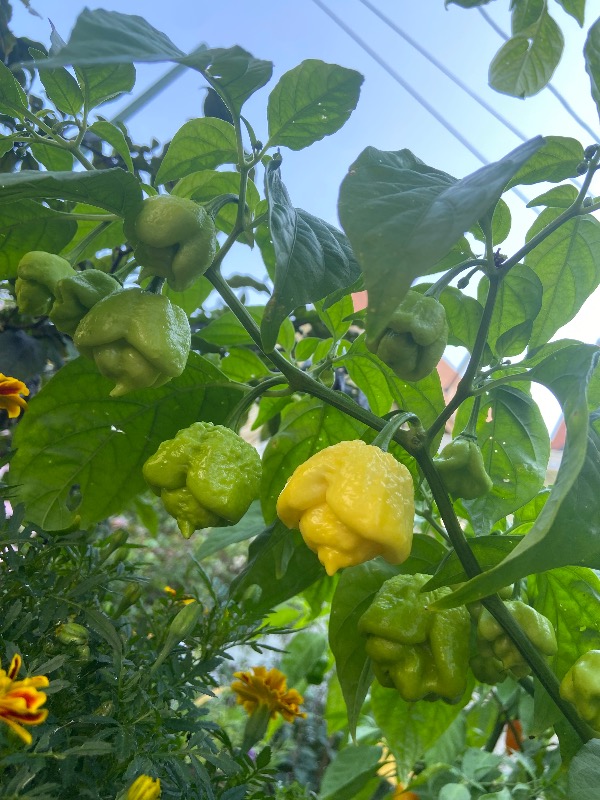
White Moruga Scorpion
Also known as White Moruga · White Trinidad Moruga Scorpion
The White Moruga Scorpion is a rare white variant of the Trinidad Moruga Scorpion from Trinidad and Tobago. This Capsicum chinense cultivar produces creamy white pods with superhot heat exceeding 800,000 SHU and a distinctive tropical fruity flavor with citrus notes. It is prized for its striking appearance and intense yet flavorful heat.
About 54 times a Capsi Jalapeño (25,086 SHU typical).
Growing
~110 days to maturity
Fruit size
5–8 cm
Flavor & Use
Tropical fruity with prominent citrus notes and a sweet, zingy finish, offering a clean and intense experience typical of white chinense varieties.
Culinary
About
The White Moruga Scorpion, also known as the White Trinidad Moruga Scorpion, is a captivating superhot pepper that stands out with its pale, creamy-white pods when fully ripe. These peppers start green and mature to a bright white, sometimes showing subtle yellow tinges or faint purple mottling. The pods typically measure 2 to 3 inches in length, often roundish or slightly elongated with a characteristic scorpion-like tail, and feature notably thick walls. The plants are robust and productive, reaching 3 to 4 feet in height. With Scoville heat units generally ranging from 800,000 to 1,500,000, it delivers sharp, immediate heat paired with a sweet, zingy tropical fruity flavor featuring prominent citrus notes. This combination makes it highly valued for creating visually striking hot sauces, salsas, chili powders, and fermented blends where the unusual white color provides excellent contrast. It is a natural or selectively bred variant of the classic Trinidad Moruga Scorpion, sharing the same species and origin but distinguished by its pale pigmentation and slightly moderated heat profile compared to the red original.
Backstory
The White Moruga Scorpion emerged as a rare white phenotype of the iconic Trinidad Moruga Scorpion, likely through natural mutation or selective breeding from lighter variants within the Capsicum chinense species. It retains the intense heat and fruity profile of its parent while providing a unique pale appearance ideal for visual impact in culinary applications.
Appearance
Growing
Heritage
ExploreWe don't have a documented family for this pepper yet.
Sources
FAQ
- How hot is White Moruga Scorpion?
- Capsi’s sourced range is 800,000–1,900,000 SHU (Vendor Claim). Capsi uses a sourced range and a trust tier, not a single marketing number. How we verify heat: https://web.thecapsi.app/learn/heat-and-capsaicin/how-we-measure-heat
- What does White Moruga Scorpion taste like?
- Tropical fruity with prominent citrus notes and a sweet, zingy finish, offering a clean and intense experience typical of white chinense varieties.
- How do I grow White Moruga Scorpion?
- White Moruga Scorpion: about 110 days to maturity, tropical/subtropical climate, full sun, hardiness zones 9-11.
- What can I substitute for White Moruga Scorpion?
- White Bhut Jolokia, Peruvian White Habanero