
Honey Badger Rocoto
Also known as Honey Badger Manzano
This cool-tolerant variety features fuzzy leaves and black seeds, adapts well to partial sun and cooler conditions, and performs as a long-lived perennial in frost-free climates. Excellent for sauces, fresh use, stuffing, and more.
Growing
~100 days to maturity
Fruit size
3–6 cm
Flavor & Use
Bold fruity flavor with sweet and citrusy notes, often reminiscent of apples; juicy and thick-fleshed.
Culinary
About
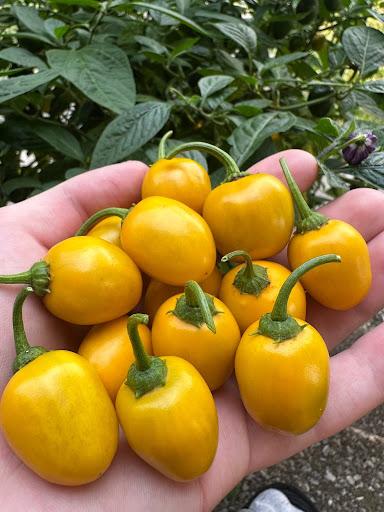
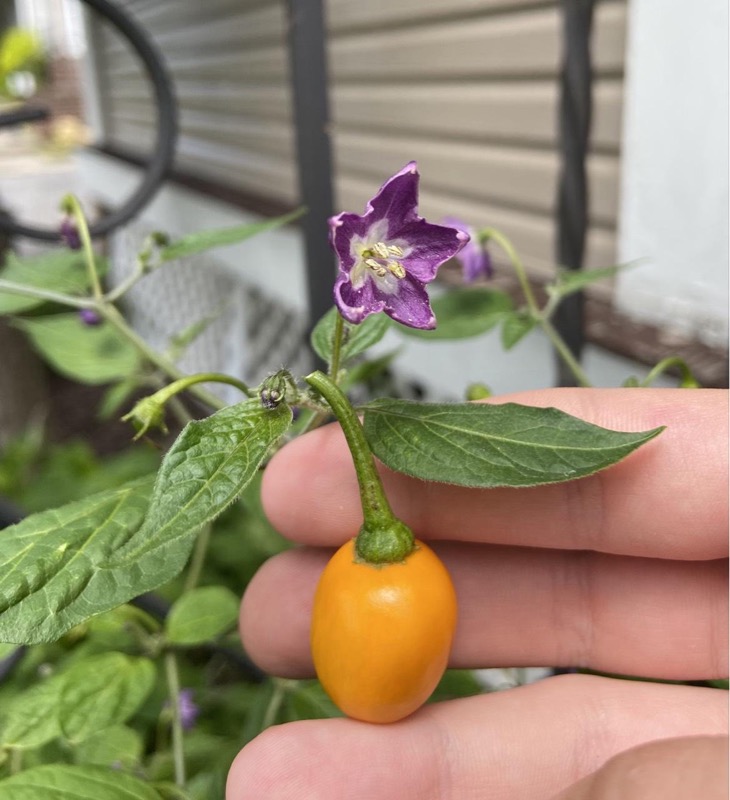
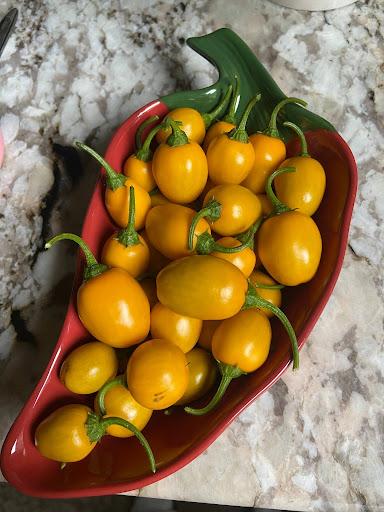
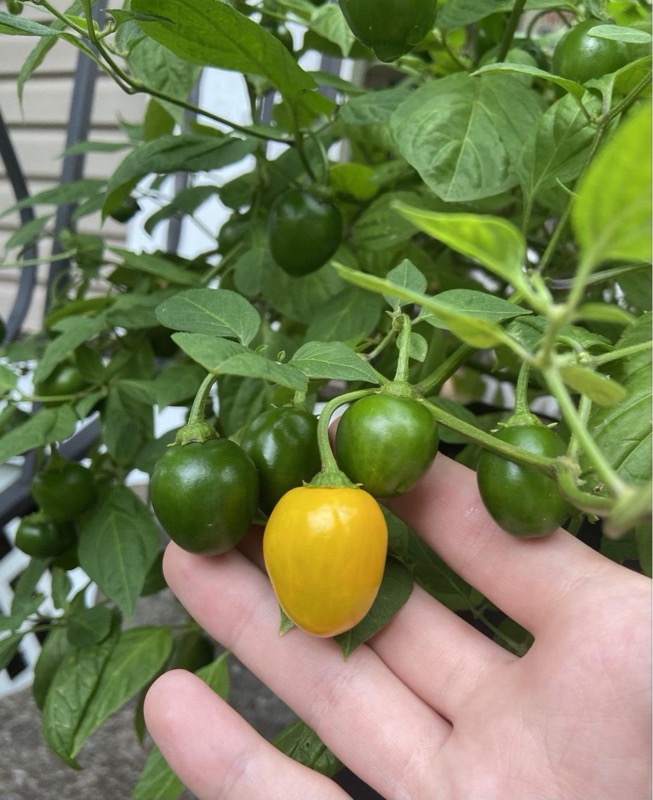
Honey Badger Rocoto is a compact, golden-fruited cultivar of the rocoto pepper (Capsicum pubescens). As a true Capsicum pubescens, the plant features fuzzy/hairy leaves, stems, and distinctive black seeds, along with purple-tinged flowers. Unlike many rocotos that require consistently warm highland conditions, Honey Badger is relatively easy to grow and adapts well to cooler summers, partial sun, and fog-prone or temperate climates. In mild, frost-free areas it grows as a long-lived perennial (often 10–20+ years), reaching up to about 4 feet tall and remaining highly productive and ornamental. Its robust, juicy flesh excels in sauces, salsas, hot sauces, roasting, stuffing, drying, and fresh preparations such as stir-fries, eggs, or stews. The variety’s resilience and visual appeal make it a standout for both gardens and kitchens.
Backstory
Rocoto peppers (Capsicum pubescens) originated in the cloud forests and highlands of the Central Andes (primarily Peru, Bolivia, and Ecuador) and were domesticated thousands of years ago by indigenous peoples, with archaeological evidence dating back over 6,000 years and importance in pre-Inca and Inca cultures. The Honey Badger Rocoto is a modern selection from this ancient lineage, chosen for its distinctive golden-yellow color, smaller oval pods, thick juicy walls, bold fruity flavor, and notably better adaptability to cooler summers and partial sun than many traditional rocotos, making the species more accessible to gardeners in temperate or variable climates. The name evokes the resilient toughness of the honey badger animal.
Appearance
Growing
Heritage
ExploreWe don't have a documented family for this pepper yet.
Sources
FAQ
- How hot is Honey Badger Rocoto?
- Capsi’s sourced range is 12,000–30,000 SHU (Vendor Claim). Capsi uses a sourced range and a trust tier, not a single marketing number. How we verify heat: https://web.thecapsi.app/learn/heat-and-capsaicin/how-we-measure-heat
- What does Honey Badger Rocoto taste like?
- Bold fruity flavor with sweet and citrusy notes, often reminiscent of apples; juicy and thick-fleshed.
- How do I grow Honey Badger Rocoto?
- Honey Badger Rocoto: about 100 days to maturity, cool highland / cloud forest climate, full to partial sun, hardiness zones 9-11.
- What can I substitute for Honey Badger Rocoto?
- Capsi does not have that recorded yet.