
Banana Pepper
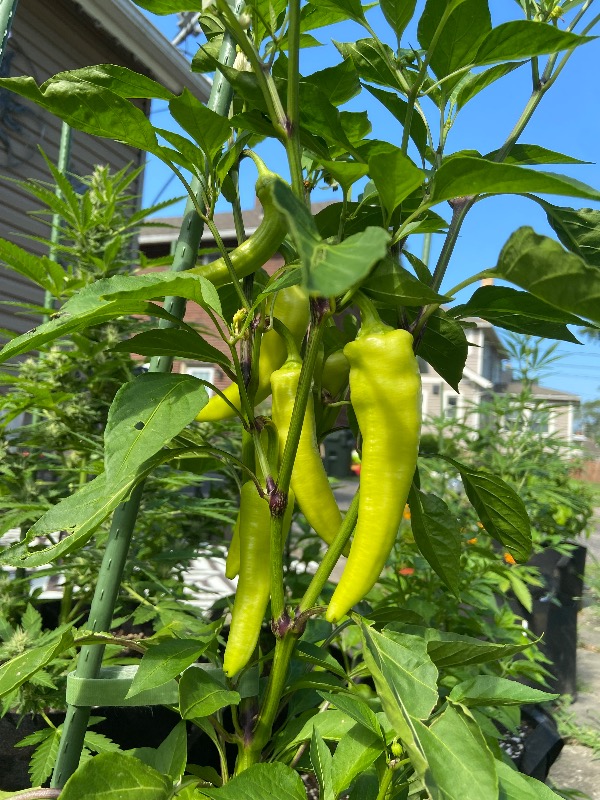
Also known as Hungarian Banana Pepper · Sweet Banana Pepper · Yellow Wax Pepper · Banana Chile
Banana Pepper is a Capsicum annuum cultivar from Hungary. Capsi’s sourced range is 28–195 SHU (Lab-verified). Flavor is sweet, tangy, mild, fruity, peppery. Used for pickled peppers, sandwiches, pizzas, salads, antipasto. Heat is a range, not a single marketing number.
The Banana pepper (also known as Hungarian Banana or Sweet Banana pepper) is a mild, sweet, tangy chili famous for its long, curved, banana-like shape and bright yellow color when ripe. It is a staple in pickling, sandwiches, pizzas, and salads thanks to its crisp texture and gentle flavor.
About 1/285 the typical heat of a Capsi Jalapeño (31,902 SHU).
Growing
~70 days to maturity
Fruit size
10–20 cm
Flavor & Use
Sweet and tangy with a mild peppery finish and crisp, juicy texture. The flavor is brighter and slightly more acidic than a bell pepper, making it excellent for fresh eating or pickling.
Culinary
About
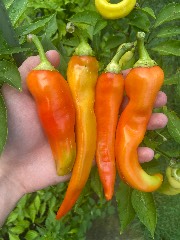
Banana peppers are elongated, curved fruits (4–8 inches / 10–20 cm long) with smooth, waxy skin. They are usually harvested yellow-green to bright yellow; if left on the plant they ripen to orange or bright red. The flesh is thick, crisp, and juicy with very low heat. Plants are productive and grow 2–3 ft tall.
Backstory
Banana peppers trace their ancestry to the Capsicum annuum varieties brought from the Americas to Europe during the Columbian Exchange. They were refined in Hungary and other parts of Central/Eastern Europe into the long, sweet, curved form we know today. The name comes from their distinctive banana-like shape and bright yellow color. In the United States they became popular in the 20th century as a pickled condiment and pizza topping, especially in Italian-American and deli culture. They remain one of the most widely grown mild sweet peppers for both home gardens and commercial pickling.
Appearance
Growing
Heritage
We don't have a documented family for this pepper yet.
Sources
Heat figures in Capsi are tied to a source and a trust tier. How we verify heat
- 28 SHU · Lab-verifiedMalak Alghamdi, Thirumurugan Rathinasabapathy, Slavko Komarnytsky (2025) Int. J. Mol. Sci. · HPLC10.3390/ijms26104916
- 195 SHU · Lab-verifiedJessy Pavón-Pérez, Carlos Peña-Farfal, Mario Aranda, Karem Henriquez-Aedo (2019) Journal of the Chilean Chemical Society · HPLC10.4067/S0717-97072019000204475
- 0–500 SHU · Vendor ClaimSandia Seed Company
- 0–120 SHU · Vendor ClaimG And G Peppers, LLC
- 0–500 SHU · Vendor ClaimTyler Farms
- Overview, nomenclature, history, and botanyen.wikipedia.org
- Detailed Scoville, flavor, and culinary infopepperscale.com
- Pepper profiles, heat, and useschilipeppermadness.com
- History, geography, and culinary applicationsspecialtyproduce.com
- USDA nutrition data for raw banana peppersfdc.nal.usda.gov
- Botanical description, appearance, and cultivation guidegardenia.net
- Seed catalog details, size, uses, AAS winner historyburpee.com
Last updated 18 Sep 2026 at 20:14
FAQ
- How hot is Banana Pepper?
- Capsi’s sourced range is 28–195 SHU (Lab-verified). Capsi uses a sourced range and a trust tier, not a single marketing number. How we verify heat: https://web.thecapsi.app/learn/heat-and-capsaicin/how-we-measure-heat
- What does Banana Pepper taste like?
- Sweet and tangy with a mild peppery finish and crisp, juicy texture. The flavor is brighter and slightly more acidic than a bell pepper, making it excellent for fresh eating or pickling.
- How do I grow Banana Pepper?
- Banana Pepper: about 70 days to maturity, warm temperate/subtropical climate, full sun, hardiness zones 9-11.
- What can I substitute for Banana Pepper?
- mild Hungarian wax pepper, pepperoncini (for tangier flavor), Cubanelle